Stainless Steel vs Nonstick Cookware: Which Set Fits Your Kitchen

Stainless steel gives you hard searing, pan sauces, and a surface that tolerates metal tools, while nonstick gives you effortless release for eggs, fish, and sticky foods. Most home cooks end up happier with one primary set and one or two pans of the other type rather than an all-or-nothing choice.
I based this guide on manufacturer specifications, care instructions, and published guidance such as USDA food safety recommendations. The goal is simple: match each material to how you actually cook, then avoid the common mistakes that shorten a pan's life.
Stainless Steel vs Nonstick Cookware at a Glance
The table below compares the two materials on the criteria that matter most day to day. Specific values such as oven-safe temperature, dishwasher safety, and cooktop compatibility always come from the manufacturer listing or manual, so check those before you buy.
| Criterion | Stainless Steel | Nonstick |
|---|---|---|
| Browning and searing | Excellent fond development for pan sauces | Weaker browning because of the coating |
| Food release | Requires fat and technique | Very easy release with little or no fat |
| Durability | Resists scratching, dents, and metal utensils | Coating wears over time and can flake |
| Care and cleaning | Soak and scrub, dishwasher depends on the manual | Gentle washing, dishwasher depends on the manual |
| Heat control | Responds well to temperature changes | Best at low to medium heat |
| Utensils | Metal, wood, or silicone | Wood, silicone, or plastic only |
| Weight | Usually heavier, especially with a copper core | Usually lighter and easier to lift |
| Best uses | Steaks, chops, roasts, sauces, deglazing | Eggs, pancakes, fish, sticky starches |
Browning, Fond, and Flavor Development
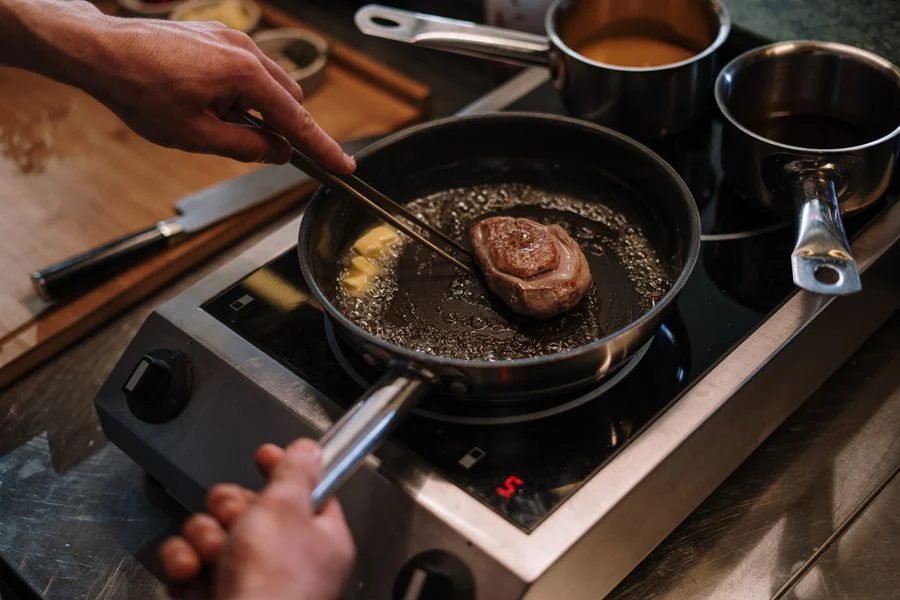
Stainless steel lets you build the browned bits, called fond, that give pan sauces their depth. When you sear a steak or brown chicken thighs, those bits stay in the pan and dissolve when you add wine, stock, or vinegar. Nonstick surfaces discourage that browning because the coating is designed to keep food from sticking, so less residue stays behind.
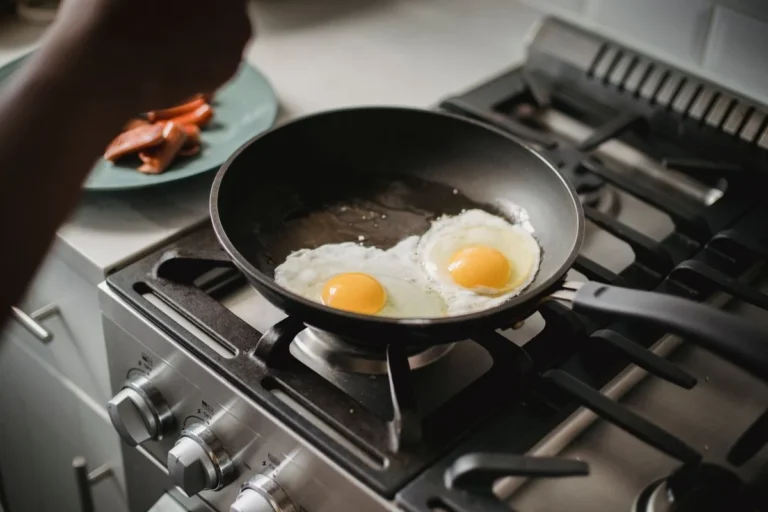
That does not make nonstick useless for savory cooking. It is simply better suited to foods where release matters more than crust, such as fish fillets, crepes, and scrambled eggs. If you want both behaviors, keep one stainless skillet for searing and one nonstick skillet for delicate items.
Practical Tips for Better Browning
- Pat food dry before it hits the pan, since surface moisture steams instead of browns.
- Preheat the pan, then add oil and wait a few seconds before adding food.
- Leave food undisturbed until it releases on its own, which signals the crust has formed.
- Deglaze promptly with stock, wine, or vinegar while the pan is still hot.
Release, Heat Limits, and Coating Care
Nonstick shines when you want food to slide out intact. The trade-off is heat: never heat an empty nonstick pan on high, and keep cooking at the low to medium settings the manufacturer specifies. High heat can degrade the coating, and overheating also risks fumes that are best avoided in a home kitchen.
Stainless steel has no coating to degrade, so it tolerates higher heat and metal utensils. It also handles acidic ingredients like tomato sauce and lemon without concern. The trade-off is that eggs and sticky foods demand more fat and attention, and cleanup takes more effort.
For nonstick, follow the manufacturer heat, utensil, and dishwasher guidance, and retire a pan with a damaged coating as the manufacturer directs. If coating ingredients are a concern for you, my roundup of PFAS free nonstick cookware sets covers options that avoid those materials.
Common Mistakes to Avoid
- Using metal tongs or whisks in a nonstick pan, which scratches the coating.
- Preheating a nonstick pan empty on high heat instead of using low to medium.
- Stacking pans without protection, which scuffs both stainless and nonstick surfaces.
- Scrubbing stainless with abrasive pads that leave visible scratches, when a soak and a soft sponge usually suffice.
Durability, Weight, and Long-Term Ownership
A quality stainless steel pan can last for years because there is no coating to wear through. It may discolor or develop a rainbow tint from heat, but that is cosmetic and does not affect cooking. Nonstick pans generally have a shorter working life because the release surface degrades with use, heat, and washing.
Weight matters more than many shoppers expect. Stainless steel, especially with a copper core, tends to be heavier, which helps with stability but can tire your wrist when you toss vegetables. Nonstick pans are usually lighter, which many cooks prefer for everyday egg and pancake duty.
If you want a stainless set with strong heat response, my roundup of copper core stainless steel cookware explains what that construction changes in practice. For a dedicated egg and fish pan, my roundup of non stick cookware sets covers the release-focused side of the market.
Cooktops, Ovens, and Utensils
Cooktop compatibility varies by pan, so check the manufacturer listing for your specific model. Induction requires a magnetic base, gas and electric are more forgiving, and some nonstick pans have handles or coatings that limit oven use. Always confirm the oven-safe temperature in the manual rather than assuming.
Utensils deserve their own note. Stainless steel pairs well with metal tools, while nonstick needs wood, silicone, or plastic to protect the coating. My roundup of kitchen utensils for nonstick cookware covers the softer options, and there is a separate list for stainless if you want metal tools.
Food safety still comes down to temperature, not pan material. Use an instant-read thermometer and follow USDA safe minimum internal temperatures for meat, poultry, and leftovers. A refrigerator at 40 °F or below and a freezer at 0 °F keep stored food in the right range.
Which One Should You Choose
There is no single winner, because the right answer depends on what you cook most often. Use the lists below to decide where to put your money first.
Choose Stainless Steel If
- You sear, roast, braise, or deglaze often and want pan sauces.
- You prefer metal utensils and do not want to baby a coating.
- You want a set that can stay in service for many years.
- You cook with acidic ingredients like tomato, wine, or citrus.
- You are willing to use fat and technique to prevent sticking.
Choose Nonstick If
- Eggs, pancakes, fish, and sticky foods are your daily staples.
- You want easy release with minimal fat and quick cleanup.
- You prefer a lighter pan that is easy to lift and maneuver.
- You are cooking at low to medium heat and will follow the manual.
- You accept that the pan will need replacing sooner than stainless.
Who Can Skip Each One
- Skip a full stainless set if you rarely sear and mostly reheat or make eggs.
- Skip nonstick if you already own one small skillet for eggs and prefer durable pans elsewhere.
- Skip both if your cooking is mostly oven roasting on sheet pans, where neither material is the deciding factor.
Frequently Asked Questions
Can I use metal utensils on stainless steel cookware?
Yes, stainless steel generally tolerates metal utensils without the coating damage that nonstick suffers. Check the manufacturer guidance anyway, since some finishes and handles have their own limits. Rounded metal tools are gentler than sharp edges on any pan.
Why does food stick to stainless steel even when I use oil?
The usual causes are a pan that is not hot enough, food that is still wet on the surface, or moving food before a crust has formed. Preheat the pan, dry the food, add oil, and wait for the food to release on its own. Stainless rewards patience more than nonstick does.
Is it safe to put nonstick cookware in the dishwasher?
That depends on the manufacturer, so check the listing or manual for your specific pan. Many makers recommend hand washing to protect the coating, while others state that their pans are dishwasher safe. Follow the guidance for your model rather than a general rule.
When should I replace a nonstick pan?
Retire a pan with a damaged coating as the manufacturer directs, especially if the surface flakes, scratches deeply, or releases food unevenly. A worn coating cannot be restored at home. Stainless steel usually only needs cleaning, not replacement, unless the pan is warped or the handle is loose.
Final Thoughts
For most home cooks, the practical answer is a stainless steel core set plus one or two nonstick pans for eggs, fish, and sticky foods. That combination covers searing and pan sauces without giving up easy release where it matters most.
Buy for the way you cook, read the manual for heat and dishwasher limits, and replace nonstick when the coating is damaged. Do that and both materials will earn their space in your kitchen.