Can You Put Nonstick Pans in the Dishwasher?

Yes, you can put some nonstick pans in the dishwasher, but only if the manufacturer explicitly says the pan is dishwasher safe. Many nonstick pans are labeled hand wash only, and even dishwasher safe models can wear out faster with repeated machine washing.
I based this guide on manufacturer specifications, care instructions, and published guidance such as USDA food safety recommendations. The short answer depends less on the pan's brand and more on what the manual says about the coating, the base material, and the handle.
The Short Answer: Check the Manual First
The only reliable way to know whether a nonstick pan can go in the dishwasher is to read the care instructions that came with it. Manufacturers know their coating formula, their base metal, and how the handle is attached, and their guidance is the standard I would follow. A pan that is dishwasher safe will usually say so on the packaging, the pan itself, or the product listing.
If the instructions say hand wash only, treat that as a firm rule. It does not mean the pan will fall apart after one cycle, but it does mean the maker will not stand behind the coating if repeated dishwasher exposure causes it to degrade. When I compare nonstick cookware, dishwasher safety is one of the first specs I check because it affects how long the pan is likely to stay slick.
It also helps to know that dishwasher safe is not an all or nothing label. Some pans are safe in the bottom rack but not the top, or safe on a normal cycle but not on a heavy duty or high heat dry setting. The manual is where those details live, and they matter more than the marketing badge on the box.
Why Dishwashers Are Hard on Nonstick Coatings
Dishwasher detergent is more alkaline than typical hand washing soap, and it is designed to attack baked on grease. That same strength can gradually break down the slick surface of a nonstick coating, especially at the rim where the coating is thinnest. Over many cycles, the pan may lose its release properties even if it still looks fine.
Heat is the other factor. Dishwasher wash water and the drying cycle expose the pan to sustained warmth, and nonstick coatings have a maximum temperature they are designed to handle. The manufacturer listing or manual is the only reliable source for a specific pan's heat limits, so I do not assume a pan is fine just because it survived a cycle.
There is also the physical side. Pans can shift and knock against other dishes, and dishwasher racks can scratch a coating that is already stressed. Handles with rivets or wrapped materials may trap water, and aluminum cores can discolor or corrode if the edge seal is compromised. None of this ruins a pan overnight, but it shortens its useful life.
Factors That Decide If Your Pan Is Dishwasher Safe
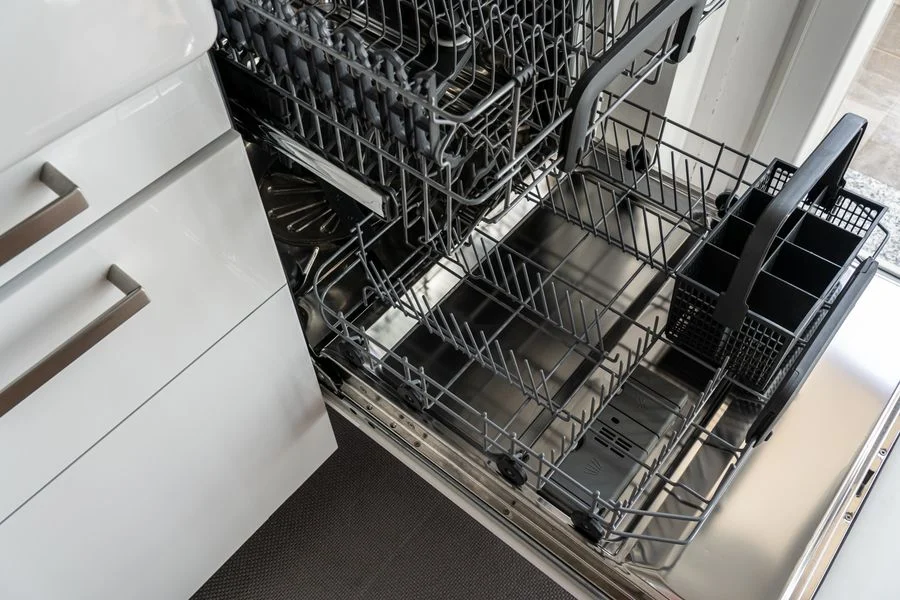
When I check a nonstick pan's dishwasher guidance, I look at a few specific things. The coating type matters, since some reinforced coatings are rated for machine washing while basic ones are not. The base material matters too, because exposed aluminum edges and some handle fixings do not tolerate repeated wet cycles. The handle material and attachment are often the weak point.
| Factor | What to Check in the Manual |
|---|---|
| Coating | Whether the maker lists it as dishwasher safe or hand wash only |
| Base material | Whether exposed edges or the core can corrode or discolor |
| Handle | Whether rivets, wrapped grips, or glued joints trap water |
| Rack position | Whether the maker limits the pan to the bottom or top rack |
| Cycle and dry | Whether high heat wash or heated dry is discouraged |
A common mistake is assuming that a pan marketed as durable is automatically dishwasher safe. Durability and dishwasher compatibility are different claims. Another mistake is ignoring the rack position, since a pan that is safe in one position may not be safe in another. When the manual is silent or the label is missing, I treat the pan as hand wash only.
If you are shopping for a set and want the option of machine washing, my roundup of nonstick pots and pans sets notes which sets publish dishwasher guidance. For a single everyday pan, my roundup of 12 inch nonstick skillets with lid is a good place to compare care instructions side by side.
How to Machine Wash a Dishwasher Safe Nonstick Pan
When a pan is rated for the dishwasher, a little care still goes a long way. I would load it alone or with light items so it does not bang around, and I would place it where the manual allows. Avoid stacking other dishes inside it, since that is a common way coatings get scratched.
- Confirm the pan is labeled dishwasher safe in the manual or product listing.
- Scrape off food residue and rinse loose debris before loading.
- Place the pan in the rack position the manufacturer specifies.
- Choose a normal cycle and skip high heat or heated dry if the manual warns against it.
- Remove the pan promptly and dry it fully, including around rivets and the rim.
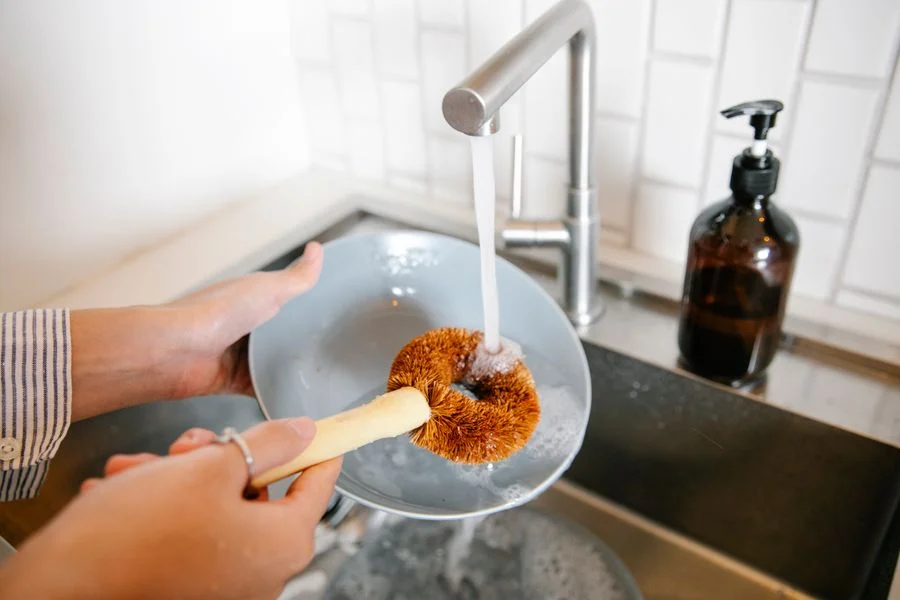
Even with a dishwasher safe pan, hand washing is often the better habit for the coating. A quick wash with mild soap and a soft sponge takes little time and removes the main causes of coating wear. If you want to protect the surface, reserve the dishwasher for occasional use rather than every meal.
When to Hand Wash Instead
Hand washing is the safer choice when the manual says hand wash only, when the coating is already showing wear, or when the pan has a handle style that traps water. It is also the better option for anyone who wants the nonstick surface to last as long as possible. The trade-off is a few minutes of cleanup versus a longer lasting pan.
Some cooks can skip the dishwasher question entirely by choosing pans that are easy to hand wash. If you mainly fry eggs, my roundup of non stick pans for frying eggs focuses on pans that release cleanly with minimal effort. If your stove runs on gas, my roundup of nonstick pans for gas stoves also notes care guidance for those models.
- Hand wash when the manual says hand wash only.
- Hand wash when the coating is scratched, flaking, or dull.
- Hand wash when the handle has rivets or a wrapped grip that holds water.
- Hand wash when you want the longest possible coating life.
Common mistakes to avoid include putting a hot pan straight into the dishwasher, using abrasive pads on the coating, and assuming that a dishwasher safe label means any cycle is fine. I would also never heat an empty nonstick pan on high, and I would follow the manufacturer's heat, utensil, and dishwasher guidance. Retire a pan with a damaged coating as the manufacturer directs.
Frequently Asked Questions
Can I put a nonstick pan in the dishwasher if the label is missing?
If the label is missing and you cannot find the manual or product listing, treat the pan as hand wash only. Without the manufacturer's guidance, you cannot know the coating's limits or the handle's water tolerance. Hand washing with mild soap and a soft sponge is the safer default.
Does dishwasher safe mean the nonstick coating will never wear out?
No. Dishwasher safe means the manufacturer says the pan can go in the dishwasher under its stated conditions, not that the coating lasts forever. Detergent, heat, and physical contact still cause gradual wear. Hand washing remains the gentlest option for any nonstick surface.
What should I do if my nonstick pan starts flaking after dishwasher cycles?
Stop using the pan and follow the manufacturer's instructions for retiring it. A damaged coating can shed particles into food, and the pan will no longer release food properly. Check the manual or the maker's website for disposal or warranty guidance before replacing it.
Is it safe to put a nonstick pan in the dishwasher if the handle is wooden?
Only if the manufacturer explicitly says the whole pan, including the handle, is dishwasher safe. Wooden handles can absorb water, crack, or loosen over repeated cycles. When in doubt, hand wash the pan and dry the handle thoroughly.
Final Thoughts
The dishwasher question comes down to one source: the manufacturer's care instructions. If the pan is labeled dishwasher safe and you follow the stated rack and cycle limits, machine washing is acceptable. If the label says hand wash only, or you cannot confirm the guidance, hand washing is the safer choice for the coating and the handle.
I would rather spend a minute at the sink than replace a pan early. Check the manual, inspect the coating before and after washing, and retire any pan with damage as the maker directs.