How to Descale a Coffee Maker the Right Way

To descale a coffee maker, fill the reservoir with a 1:1 mix of white vinegar and water (or a citric acid solution), run a full brew cycle without coffee, let it sit for 15 to 30 minutes, then run two or three cycles of plain water until the vinegar smell is gone. Mineral scale builds up in the boiler, tubing, and showerhead over time, and descaling dissolves it so the machine heats and flows properly again.
I based this guide on manufacturer specifications, care instructions, and published guidance such as USDA food safety recommendations. The steps below work for most drip machines, single-serve units, and thermal carafe models, but the exact ratio and cycle count should always come from your manual. If you are shopping for a replacement, my roundup of drip coffee makers is a good place to compare features before you decide.
What You Need to Descale a Coffee Maker
Gather everything before you start so you are not hunting for a towel mid-cycle. Most of these items are already in your kitchen.
- White vinegar (distilled) or a commercial descaling solution or citric acid powder
- Cold water, measured in cups
- A large bowl or pitcher to catch the brew
- A clean cloth or sponge
- Your coffee maker's manual, which lists the manufacturer's recommended ratio and cycle count
- Optional: a soft bottle brush for the reservoir and carafe
Do not mix vinegar with bleach or ammonia. That combination creates dangerous fumes. Also keep cleaning solutions away from food-contact surfaces until you rinse them thoroughly.
How to Descale a Coffee Maker Step by Step
- Unplug the machine and let it cool. Never descale a hot coffee maker. Wait until the heating element and carafe are at room temperature, then unplug the unit from the wall.
- Empty and rinse the reservoir. Pour out any old water, then wipe the inside with a damp cloth. Check the manual for whether the reservoir is dishwasher safe; many are hand-wash only.
- Mix your descaling solution. For vinegar, use equal parts white vinegar and cold water. For citric acid, follow the package ratio. For commercial descaler, use the amount printed on the bottle. Never guess with a stronger concentration than the manufacturer recommends.
- Fill the reservoir and start a brew cycle. Pour the solution into the reservoir and place the empty carafe or a large bowl under the brew basket. Run a full cycle without coffee grounds. If your machine has a pause-and-serve feature, keep the carafe in place so the flow is not interrupted.
- Let the solution sit. After the cycle finishes, leave the solution in the reservoir and carafe for 15 to 30 minutes. This dwell time is what dissolves stubborn scale. For heavily scaled machines, repeat the brew cycle once more with fresh solution.
- Rinse with plain water. Pour out the used solution, then fill the reservoir with clean cold water. Run a full cycle and discard the water. Repeat two or three times, or until the water tastes and smells neutral. Vinegar residue will make coffee taste sour.
- Clean the removable parts. Wash the carafe, brew basket, and reusable filter in warm soapy water. Rinse well. If your manual says a part is hand-wash only, do not put it in the dishwasher.
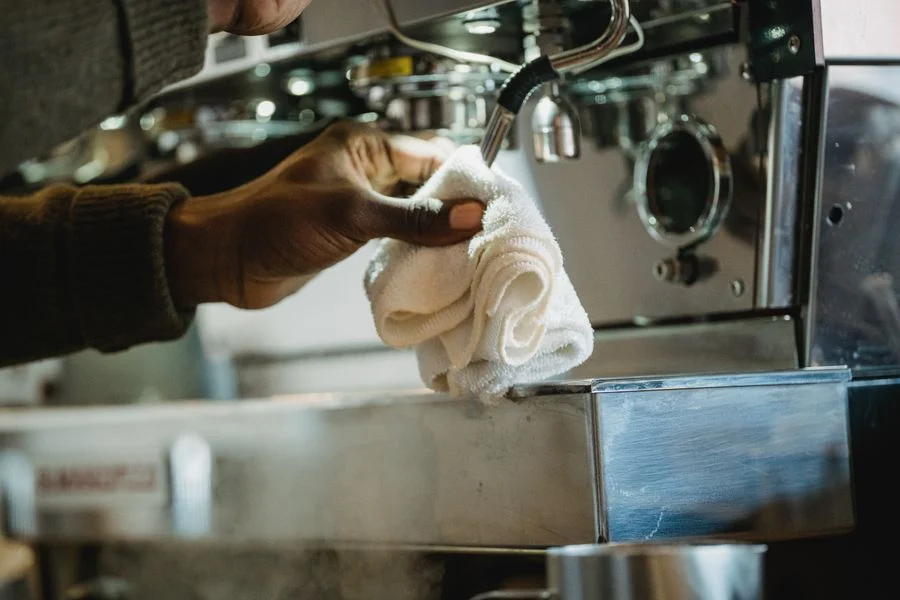
- Wipe the exterior and reassemble. Wipe the housing and warming plate with a damp cloth. Dry everything, plug the machine back in, and run one plain water cycle before brewing coffee again.
How Often Should You Descale?
The general guideline is every one to three months, but hard water speeds up scale buildup. If you see white crust around the showerhead or the brew cycle takes longer than usual, descale now. A water filter in the reservoir can slow buildup, but it does not replace descaling.
| Sign | What It Means |
|---|---|
| White or chalky film in reservoir | Mineral scale is forming |
| Brew cycle runs long or stalls | Scale is blocking the tubing |
| Coffee tastes flat or metallic | Residue is affecting extraction |
| Machine shuts off mid-cycle | Scale may be triggering a safety cutoff |
Common Mistakes to Avoid
The most common mistakes are easy to fix once you know them. Avoid these and your machine will last longer.
- Using too much vinegar. A stronger mix does not clean faster and can damage seals and plastic. Stick to the manual's ratio.
- Skipping the plain water rinses. Leftover vinegar or citric acid will make every cup taste off. Rinse until the water runs clear and neutral.
- Descaling a hot machine. Always unplug and let it cool first. Sudden temperature changes can crack the carafe or stress the heating element.
- Forgetting the removable parts. The carafe, basket, and filter holder collect oils and scale too. Wash them separately.
- Mixing cleaners. Never combine vinegar with bleach or ammonia. The fumes are hazardous.
- Ignoring the manual. Some manufacturers require a specific descaler and void the warranty if you use vinegar. Check before you pour.
If you are comparing machines with different reservoir designs, my roundup of coffee makers with a stainless steel thermal carafe explains which layouts are easier to clean and rinse.
When to Replace the Coffee Maker or Call the Manufacturer
Descaling solves most flow and taste problems, but not all of them. Contact the manufacturer or an authorized service center if the machine leaks from the base, trips a GFCI outlet, or still will not brew after two descaling cycles. Do not open the housing yourself; internal wiring and heating elements are not user-serviceable.
Consider replacing the machine if it is more than a few years old, the descaling cycles no longer restore flow, or the repair cost approaches the price of a new unit. If you brew small batches, my roundup of 4 or 5 cup drip coffee makers covers compact options that are simple to descale. For cold brew, scale is less of an issue, but the carafe and filter still need regular washing.
Who should descale: anyone using tap water, especially in hard-water areas. Who can skip it: households using distilled water in a machine with a fresh filter, though even then an occasional descale is wise. Always follow the care instructions, since some parts are hand-wash only.
Frequently Asked Questions
Can I descale a coffee maker with vinegar?
Yes, distilled white vinegar mixed 1:1 with water is a common descaling solution. Run a full cycle, let it sit 15 to 30 minutes, then rinse with plain water two or three times. Check your manual first, because some manufacturers require a specific descaler and may void the warranty if you use vinegar.
How do I know when descaling is done?
The rinse water should run clear and smell neutral, with no vinegar or citric acid odor. The brew cycle should also return to its normal time. If flow is still slow, repeat the descaling cycle once more before rinsing again.
Is citric acid better than vinegar for descaling?
Both dissolve mineral scale effectively. Citric acid leaves less odor and is often recommended for machines with aluminum or delicate seals. Vinegar is cheaper and more widely available. Follow the manufacturer's recommendation for your specific model.
Can I descale a single-serve coffee maker the same way?
The basic process is similar, but single-serve units often have a smaller reservoir and a descaling mode. Use the manufacturer's ratio and run the descaling cycle, then flush with plain water until the water runs clear. Never immerse the machine in water.
Final Thoughts
Descaling is one of the simplest maintenance tasks you can do for a coffee maker, and it takes less than an hour start to finish. The key is to use the right ratio, let the solution dwell long enough to dissolve scale, and rinse thoroughly so no residue reaches your coffee.
Put a reminder on your calendar every one to three months, or sooner if you have hard water. A clean machine brews faster, tastes better, and lasts longer, which is worth the small effort.