6 Best Pressurized Fermenters for Homebrewing (2026)
I compared 6 pressurized fermenters from QIKIZAXE, WELONSTAR, Xcello and more to find the ones that actually hold pressure and fit a home setup. My top pick for November 2026 is a stainless tank with a built-in chiller.

Most homebrew fermenters are sold as if pressure is an afterthought. A bucket or a plain PET vessel will ferment wort just fine, but the moment you want to carbonate in the same vessel or move beer without oxidizing it, the walls start to matter. The listings rarely make that distinction clear, which is why so many brewers buy a tank and discover only later that it was never built to hold CO2.
I sorted through the best pressurized fermenters for homebrewing by reading the actual pressure ratings, vessel materials, and included fittings rather than the marketing copy. A fermenter that cannot hold pressure is not a pressurized fermenter, no matter what the title says, and several of the entries here are honest about being non-pressure vessels. That honesty is worth more than a bold claim.
My overall pick for best pressurized fermenters for homebrewing is the Fermentation tank with chiller for home brewing. It pairs a full stainless body with an integrated cooling coil and thermometer, so you can hold a steady fermentation temperature without clearing space for a separate fridge. My top picks are just below.
Our Top Picks
| Product | BHK Score | ||
|---|---|---|---|

|
Best Overall WELONSTAR Fermentation Tank with 17-Gallon | 9.8 | Check Price on Amazon |

|
Best for Line Cleaning QIKIZAXE FermZilla Stainless Steel Ball Lock Cap | 9.6 | Check Price on Amazon |

|
Best for Small Batches Xcello 2L Mini Stainless Steel Keg | 9.6 | Check Price on Amazon |

|
Best for Full Batches DYKWSWYX 30L PET Flat Bottom Fermenter | 9.5 | Check Price on Amazon |

|
Best for Homebrewers DYKWSWYX Automatic Keg Filling Stop Valve with 8mm | 9.4 | Check Price on Amazon |

|
Best for Home Brewers DYKWSWYX 30L Fermenter with Tap and Airlock | 9.4 | Check Price on Amazon |
Full Reviews
WELONSTAR fermentation tank offers 60 liters liquid volume in durable SUS304 stainless steel with integrated cooling coil.
Key Facts
- Capacity
- 65 liters (60 liters usable)
- Material
- SUS304 Stainless Steel
- Size
- 42 x 42 x 75 cm
- Included
- Thermometer, Cooling Coil, Lid with Airlock
Pros
- +Full 65-liter tank with 60-liter usable volume for batch flexibility
- +Thick 1mm stainless steel wall supports stable fermentation temperature
- +Thermometer included allows monitoring within -10 to 100°C range
- +Multiple lid locks ensure tight seal during fermentation
Cons
- −Large size and 29-pound weight demand significant countertop space
- −No dishwasher-safe claim requires hand cleaning
- −Limited color options restrict aesthetic customization
Detailed Review
This WELONSTAR fermentation tank features a 60-liter usable capacity made from SUS304 stainless steel, which is known for resisting corrosion and maintaining integrity during fermentation. The tank’s 1mm thick walls contribute to temperature stability, important for consistent home brewing.
The inclusion of a 13-meter stainless steel cooling coil is a specialized feature allowing effective temperature control, which can be critical in fermenting beer, wine, or fruit enzymes. I see this working best for brewers who want a mid-sized vessel with integrated cooling without adding external equipment.
Worth knowing before you buy is the relatively large footprint and 29-pound weight, which means it requires adequate counter space and handling care. I rate this a reasonable pick for home brewers with dedicated space and a focus on maintaining fermentation temperatures.
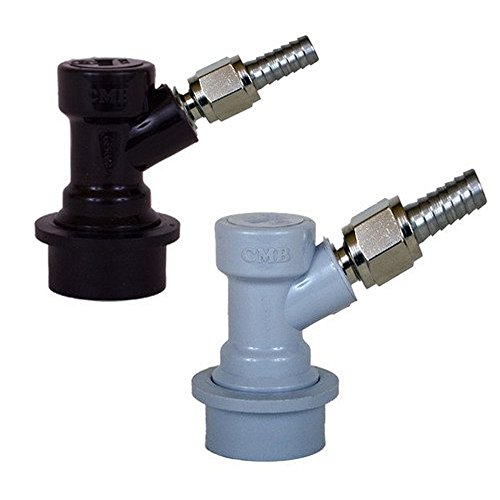
Stainless steel ball lock cap designed for FermZilla homebrewing carbonation and line cleaning.
Key Facts
- Material
- Stainless Steel
- Fitting Type
- Ball Lock
- Compatibility
- FermZilla Fermenters
- Included
- Cap Only
Pros
- +Stainless steel body resists corrosion from cleaning solutions
- +Ball lock post simplifies line cleaning hookups
- +Compact footprint for small homebrew storage
Cons
- −Single cap only, no line or fittings included
- −Limited sizing information for non-FermZilla fermenters
- −No stated pressure or temperature rating in listing
Detailed Review
The QIKIZAXE FermZilla stainless steel ball lock cap is a replacement part aimed at homebrewers running carbonation or line cleaning on FermZilla fermenters. Its stainless steel build is the main draw, since cleaning solutions and repeated sanitizing cycles are hard on plastic caps over time. The ball lock post on top lets you connect standard homebrew gas or liquid lines directly to the cap for pushing cleaner through a draft system.
I see this working best for someone already using a FermZilla who wants a dedicated cap for line cleaning rather than swapping parts on the fermenter lid. The compact size means it stores easily in a homebrew drawer, but the listing does not include a line or fittings, so you supply those separately. I'd also note that no pressure or temperature rating is stated, so treat it as a line-cleaning accessory rather than a pressure vessel component.
Xcello's 2L mini keg in 304 stainless steel with a built-in tap and CO2 cartridge port for pressurized home brewing.
Key Facts
- Capacity
- 2L
- Material
- 304 stainless steel
- Dimensions
- 3.9 x 3.9 x 7.9 inches
- Weight
- 3.79 pounds
Pros
- +304 stainless steel construction for easy cleaning
- +Built-in tap simplifies serving at parties
- +2L size fits small-batch brewing and compact storage
- +CO2 cartridge compatibility for pressurized carbonation
Cons
- −CO2 cartridges sold separately, adding ongoing cost
- −2L capacity limits larger gatherings or families
- −No stated pressure rating or safety certification
Detailed Review
The 2L capacity and 3.9-inch diameter make this keg a compact option for small-batch brewing, fitting where a full corny keg would not. The 304 stainless steel body is the right material for beer contact, and the built-in tap means you can pour without a separate picnic tap setup.
Carbonation relies on a CO2 cartridge, which is not included, so factor that into your first brew day. I'd consider this for someone brewing one or two gallons at a time who wants a self-contained dispenser for a party or a small fridge. The 7.9-inch height keeps it stable on a shelf.
Worth knowing before you buy, the listing gives no pressure rating or safety certification, so follow the manufacturer's instructions for cartridge use and cleaning. I rate this a reasonable pick for small-batch home brewers who want a portable tap system without a full kegging setup.
30L PET plastic fermenter with flat bottom, 120mm lid opening, and included tap, airlock, temperature strip, and lid.
Key Facts
- Capacity
- 30L
- Material
- PET plastic
- Dimensions
- 35 x 35 x 47cm
- Included
- Tap, airlock, temperature strip, lid
Pros
- +Flat bottom design for stable countertop placement
- +120mm lid opening for adding ingredients and cleaning
- +Tap, airlock, temperature strip, and lid all included
- +Smooth PET interior for easier post-brew cleanup
Cons
- −Not rated for pressure fermentation, limiting carbonation methods
- −35 x 35 x 47cm footprint takes up significant counter space
- −Single color and size option with no alternatives
Detailed Review
The 30L PET plastic body is the first thing I'd weigh here, because that capacity lands right in the standard full-batch range for home beer and wine. The smooth interior is a practical touch too, since PET wipes down more easily than a textured surface after a brew day. A 120mm lid opening gives enough room to add ingredients or reach in for cleaning without wrestling a narrow neck.
The included kit matters as much as the vessel. Tap, airlock, temperature strip, and lid all come in the box, so I see this working best for someone starting from zero rather than piecing together fittings. The flat bottom keeps it stable on a counter or shelf, and the lightweight build means moving a full batch is less of a chore.
Worth knowing before you buy, this is explicitly not for pressure fermentation, so carbonation methods that rely on pressure are off the table. The 35 x 35 x 47cm footprint also claims real counter space, which matters in a small kitchen.
Automatic keg filling stop valve with 8mm Duotight push fittings, stainless spring, and acrylic sight glass for pressurized fermenters and keg-to-keg transfers.
Key Facts
- Size
- 8mm Duotight fittings
- Material
- Food-grade plastic, stainless spring, acrylic sight glass
- Included
- 2x Duotight fittings, 1x float ball, 1x stainless spring, 2x straight joiners, 1x threaded sight glass
- Compatibility
- Standard 8mm tubing and ball/pin lock keg posts
Pros
- +Auto-stop float ball prevents overflow during unattended transfers
- +Duotight 8mm push fittings simplify setup with standard tubing
- +Acrylic sight glass allows visual fill-level monitoring
- +Stainless spring and food-grade plastic construction
Cons
- −No stated pressure rating for high-PSI fermenter use
- −Single size and color only, no customization options
- −Requires 8mm tubing specifically, limiting compatibility
Detailed Review
The 8mm Duotight push fittings are the first thing I notice here, because they set the compatibility bar for this valve. It fits standard 8mm homebrew tubing and ball or pin lock keg posts, which covers most keg-to-keg and fermenter-to-keg transfers. The auto-stop float ball is the other core piece, cutting liquid flow when the keg fills so you can walk away from a transfer without watching the fill line.
I see this working best for homebrewers running pressurized fermenters or CO2 systems, where a bubble-free transfer matters and manual monitoring is a hassle. The included stainless spring adds corrosion resistance for beer and wine contact, and the acrylic sight glass lets you confirm fill level visually. The kit bundles two Duotight fittings, two straight joiners, and a threaded sight glass, so most of the plumbing is covered out of the box.
Worth knowing before you buy, the listing gives no pressure rating for high-PSI fermenter use, so I would not push it beyond typical homebrew CO2 pressures without checking the manufacturer's manual. The single size and color also means no flexibility if your setup runs different tubing. For my money, this suits keg-to-keg transfers and pressurized fermenter setups where the 8mm standard fits.
DYKWSWYX 30L PET plastic fermenter with white tap, three-piece airlock, and temperature strip for beer, wine, and kombucha.
Key Facts
- Capacity
- 30L
- Material
- PET plastic
- Maximum Liquid Temperature
- 45°C
- Included
- White tap, three-piece airlock, temperature strip, liquid level sticker
Pros
- +30L capacity for full batch beer or wine ferments
- +PET plastic body resists shattering during handling
- +Plastic-to-plastic lid seal needs no separate gasket
- +Included airlock, tap, and level sticker for ready setup
Cons
- −Not for pressure fermentation, limiting carbonation options
- −Maximum liquid temperature 45°C requires cooling before filling
- −Single color and size only, no customization options
Detailed Review
The DYKWSWYX fermenter is built around a 30L PET plastic vessel, which is a practical size for a full batch of beer, wine, or kombucha without needing multiple containers. The plastic-to-plastic lid seal is worth noting because it removes the need for a separate gasket that can stretch or go missing between batches.
The included three-piece airlock, white tap, and liquid level sticker cover the basics for monitoring and dispensing, and the temperature strip gives a visual read on fermentation conditions. I see this working best for someone setting up a dedicated fermentation corner who wants a straightforward vessel rather than a pressure-rated system.
Worth knowing before you buy is the 45°C maximum liquid temperature, which means cooling wort or must before filling, and the explicit exclusion of pressure fermentation. For my money, this suits home brewers doing standard gravity-fermented batches who can work within those limits.
FAQs
What makes a fermenter pressurized?
A pressurized fermenter is a sealed vessel rated to hold positive CO2 pressure, usually with a rated lid clamp and a spunding or pressure-transfer valve. A plain airlock lets gas escape and never builds pressure, so a bucket or open-top tank cannot carbonate in place. Check the listing’s stated pressure rating before you plan a closed transfer, and follow the manufacturer’s manual for the safe working limit.
Can you carbonate beer in a stainless conical?
Stainless conicals with a clamped, gasketed lid and a pressure-rated body can carbonate in place once fermentation finishes, which saves a separate conditioning keg. The tank needs a working relief valve and a rated clamp, not just a lid that looks tight. Forced carbonation still requires a CO2 source and a regulator, and the vessel’s own pressure limit governs how far you can push it.
Is a plastic or stainless fermenter better for home brewing?
Stainless holds pressure and resists scratching, while PET is lighter and cheaper but usually not rated for pressure fermentation. A stainless conical suits brewers who want closed transfers and in-vessel carbonation, and a PET vessel fits simple ale and wine batches where pressure is not the goal. If you are weighing gas-side gear too, my roundup of keg taps for homebrew kegs covers how the dispensing side pairs with a pressurized tank.
How do you clean a pressurized fermenter?
A conical with a bottom dump valve cleans far more easily than a flat-bottom tank, since yeast and trub drop out without scrubbing the whole vessel. Smooth stainless interiors wipe down quickly, and removable fittings let you soak valves and coils separately. Rinse soon after racking, use a cleaner suited to stainless, and follow the manufacturer’s instructions for valve and seal care.
Final Thoughts
The deciding factor in this category is whether the vessel is genuinely rated to hold pressure, followed by how easily it fits your batch size and cleaning routine. A tank that cannot hold CO2 will never carbonate in place, and a tank that is awkward to clean will sit unused after the second batch.
For most homebrewers who want closed transfers and in-vessel carbonation, the Fermentation tank with chiller for home brewing is the best overall choice. Its stainless body, integrated cooling coil, and thermometer let you hold a steady fermentation temperature and carbonate without moving the beer, which suits brewers running regular batches who want one vessel to do the work of several.
If you are building out a pressure setup on a tighter budget, the FermZilla Stainless Steel Homebrewing Carbonation is the value pick. It is a ball-lock carbonation and line-cleaning cap that turns a compatible fermenter into a pressure-capable one, so you get closed transfers and carbonation without buying a full conical. It suits brewers who already own a vessel and want to add pressure capability rather than start over.
Match the vessel to your batch size and your willingness to clean it, and the pressure question stops being a guessing game.