
9 Best Japanese Oroshigane Graters for Ginger (2026)
I compared 9 Japanese oroshigane graters from Product of Gifu Japan, KITCHENDAO, Generic and more in November 2026. The Otsumami Tokyo is my top pick for compact daily use, while the KITCHENDAO porcelain tool is the budget-friendly choice for ginger and garlic.

Grating ginger for a stir-fry should take seconds, not minutes. Yet many kitchen graters either shred the ginger into uneven chunks or leave half the root stuck to the surface. A proper Japanese oroshigane grater solves that by using fine, sharp teeth that turn fibrous roots and daikon into a smooth, moist paste without tearing the fibers.
I looked at the best Japanese oroshigane graters to find the ones with a real stated grating surface, a stable base, and materials that hold up to daily use. My overall pick for best Japanese oroshigane graters is the Otsumami Tokyo Japanese Stainless Steel Grater. It is compact enough to sit on the table while you eat, and the fine stainless teeth are built for small, quick jobs like ginger, garlic, and citrus zest.
My top picks are just below.
Our Top Picks
| Product | BHK Score | ||
|---|---|---|---|

|
Best Overall Otsumami Tokyo Japanese Stainless Steel Grater | 9.9 | Check Price on Amazon |

|
Best for Small Kitchens IPPINKA Japanese Stainless Steel Oroshigane Grater | 9.9 | Check Price on Amazon |

|
Best for Fresh Wasabi Japanese Classic Wasabi Grater with Genuine | 9.9 | Check Price on Amazon |

|
Best for Fine Grating TIKUSAN Japanese Stainless Steel Oroshigane Grater | 9.9 | Check Price on Amazon |
|
|
Best for Daikon Prep TIKUSAN Japanese Stainless Steel Oroshigane Grater | 9.9 | Check Price on Amazon |
|
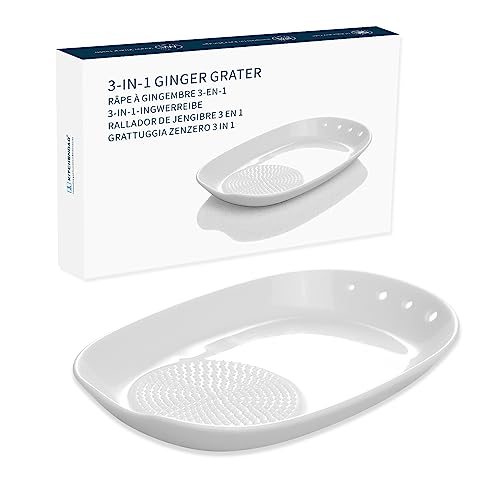
KITCHENDAO 3-in-1 Porcelain Ginger Grater | 9.8 | Check Price on Amazon |

|
Best for Japanese Cooking Ayanoya Japanese Oroshigane Grater | 9.8 | Check Price on Amazon |

|
Best for Small Drawers Seki Japan Stainless Steel Grater with ABS Handle | 9.7 | Check Price on Amazon |
|
|
TIKUSAN Japanese Stainless Steel Oroshigane Grater | 9.6 | Check Price on Amazon |
Full Reviews
Otsumami Tokyo Japanese Stainless Steel Grater
Compact Japanese-made stainless steel grater measuring 9.5 x 5 cm, sized for tabletop grating of ginger, garlic, wasabi, and citrus zest.
Key Facts
- Size
- Approx. 9.5 x 5 x 0.5 cm
- Material
- Food-grade stainless steel
- Weight
- 0.11 lb
- Care
- Rinse under running water or dishwasher
Pros
- +Compact 9.5 x 5 cm size fits crowded counters and tabletop serving
- +Fine stainless teeth handle ginger, garlic, wasabi, and citrus zest
- +Made in Japan construction with a simple rinse-clean routine
- +Dishwasher-safe option for quick cleanup after grating
Cons
- −Tiny surface limits grating to small amounts at a time
- −No protective cover or storage case included for the sharp teeth
- −Short 0.5 cm height means less clearance for knuckles on larger roots
Detailed Review
The Otsumami Tokyo grater measures roughly 9.5 x 5 cm, which puts it in the tabletop category rather than the box-grater drawer. That size is the point. It lets you grate a knob of ginger or a clove of garlic directly over a bowl or plate without hauling out a larger tool, and the fine stainless steel teeth are aimed at wasabi, citrus zest, nutmeg, and hard cheese as much as aromatics.
I see this working best for cooks who grate in small bursts, a teaspoon of zest here, a bit of garlic there, rather than processing a pile of daikon in one go. The made in Japan origin is the listing's main quality signal, and the care routine is simple, rinse under running water or run it through the dishwasher. Worth knowing before you buy, the 0.5 cm height leaves limited clearance, so larger roots may need to be cut down before grating.
The main trade-off is capacity. This is a single-portion tool, not a prep-batch grater, and no cover is included for the sharp teeth. For my money, it suits small kitchens and cooks who want fresh ginger or zest on demand.
A Japanese oroshigane grater with a stainless steel blade and polypropylene body, made in Niigata. The 11.5-inch design includes an ergonomic handle and a bowl-edge groove.
Key Facts
- Dimensions
- 11.5 x 3.62 x 0.55 inches
- Weight
- 0.24 pounds
- Material
- Stainless steel blade, polypropylene body
- Care
- Dishwasher-safe
Pros
- +Stainless steel blade handles ginger, garlic, cheese, and cinnamon
- +Bowl-edge groove stabilizes the grater over mixing bowls
- +Ergonomic handle provides a secure grip during use
- +Dishwasher-safe for easy cleanup
Cons
- −Polypropylene body may feel less premium than all-metal graters
- −Single blade surface limits fine and coarse grating options
- −No protective cover or storage case included
Detailed Review
The IPPINKA oroshigane grater is built around a stainless steel blade set into a polypropylene body, made in Niigata, Japan. Its 11.5-inch length and 0.55-inch profile make it slim enough to slide into a drawer, while the ergonomic handle gives you a firm grip when grating ginger or garlic.
I see the bowl-edge groove as the most practical detail. It lets the grater hook onto the rim of a mixing bowl, so you can grate directly into the bowl without the tool sliding around. That setup suits small kitchens where counter space is tight and you want less cleanup.
The main trade-off is the single grating surface. It handles ginger, garlic, cheese, and cinnamon, but you won't get fine and coarse options from one tool. Worth knowing before you buy if you grate different textures often. For my money, it's a reasonable pick for everyday seasoning prep.
A medium-sized Japanese grater made with natural wood and genuine dried Dasyatis Akajei skin, intended for fresh wasabi and ginger.
Key Facts
- Size
- Medium
- Material
- Natural wood / genuine dried Dasyatis Akajei
- Weight
- 0.11 lb
- Care
- Rinse with water and dry in shade
Pros
- +Genuine dried Dasyatis Akajei skin for traditional grating surface
- +Circular rubbing motion produces creamy wasabi and ginger
- +Compact medium size fits small prep areas and drawers
- +Rinse-and-shade-dry care routine is simple to follow
Cons
- −Hand-wash and shade-dry only to protect the skin
- −Small working surface limits batch size for larger meals
- −Soaking or sun-drying can cause the grater part to come off
Detailed Review
This grater uses genuine dried Dasyatis Akajei skin on a natural wood body, a construction that sets it apart from metal or ceramic graters. The medium size keeps the working surface small, which the listing acknowledges, but it is ample for fresh wasabi and ginger portions. I see this working best for cooks who want the traditional circular-rub method to build a creamy paste rather than a shredded pile.
The care routine matters here. Rinsing with water and drying in the shade is the stated method, and the listing warns that soaking or sun-drying can cause the grater part to gradually come off. That means hand-wash only, with no dishwasher or windowsill drying. Natural wood and genuine skin need that shade-dry habit to stay intact, so I'd consider this for someone willing to follow the included instruction manual closely.
Worth knowing before you buy is the limited working surface. It is not built for large batches or family-sized prep, and the medium size keeps it compact for small kitchens and drawer storage. For my money, this suits cooks who grate wasabi or ginger in small, fresh amounts and want a traditional tool rather than a high-volume one.
TIKUSAN oroshigane grater in stainless steel, 5.0 by 8.9 inches, with a 35 degree blade angle for ginger, daikon, and root vegetables.
Key Facts
- Size
- 5.0 x 8.9 in
- Weight
- 0.44 lb
- Material
- Stainless steel
- Blade angle
- 35 degrees
Pros
- +35 degree blade angle for controlled grating
- +Stainless steel construction resists rust
- +Fine surface suited to daikon and ginger
- +Compact 5.0 by 8.9 inch footprint stores easily
Cons
- −Hand-wash recommended to protect the fine blade edge
- −No nonslip base or handle, so it needs a steady grip
- −Single fine grate size limits coarse or wide shredding
Detailed Review
The TIKUSAN oroshigane is built around a 35 degree blade angle, a detail that matters when you are grating wet, fibrous ginger or a block of daikon and do not want the piece skating across the surface. The stainless steel body measures 5.0 by 8.9 inches and weighs 0.44 lb, so it covers enough area for a daikon radish while staying light enough to hold over a bowl.
I see this working best for cooks who make soba, tempura dipping sauce, or salads where fine, delicate strands of daikon matter. The fine grating surface is the single job here, and it does that job without extra attachments or a bulky hopper. Worth knowing before you buy is that there is no nonslip base or handle, so you will want a steady grip and a stable bowl underneath.
For my money, this suits a small kitchen that needs one dedicated Japanese grater rather than a drawer full of sizes. Follow the manufacturer's care instructions to keep the blade edge in shape.
TIKUSAN Japanese oroshigane grater in stainless steel, 6.5 by 11 inches, with 35-degree blade angle for grating ginger and daikon.
Key Facts
- Size
- 6.5 x 11.0 inches
- Material
- Stainless steel
- Weight
- 0.84 lb
- Blade Angle
- 35 degrees
Pros
- +35-degree blade angle for smoother grating stroke
- +Stainless steel build resists rust and cleans easily
- +Generous 6.5 by 11 inch surface for larger roots
- +Fine shred texture ideal for daikon and ginger
Cons
- −Hand wash recommended to preserve blade edge
- −Large footprint takes up drawer or counter space
- −No protective cover included for safe storage
Detailed Review
The TIKUSAN oroshigane grater is built around a 35-degree blade angle that reduces resistance and keeps ginger and daikon from slipping as you grate. Its 6.5 by 11 inch stainless steel surface gives you enough room to work a whole root vegetable without stopping to reposition, which matters when you are prepping soba toppings or a batch of grated daikon for salads.
I rate this a reasonable pick for anyone who grates fresh ginger and radish regularly and wants a dedicated tool rather than a box grater. The stainless steel body wipes down easily after use, though I would hand wash it to keep the fine teeth sharp. The main trade-off is the footprint, since an 11 inch grater needs drawer or counter room that a compact handheld model does not.
Worth knowing before you buy is that no protective cover is included, so storage takes a little care. For my money, this suits cooks who already work with daikon and ginger often and want a traditional oroshigane on hand.
KITCHENDAO 3-in-1 Porcelain Ginger Grater
A 6.5 x 4.3 inch white porcelain tool that grates ginger and garlic, strips herbs, and doubles as a spoon rest.
Key Facts
- Dimensions
- 6.61 x 4.33 x 0.78 inches
- Material
- Porcelain ceramic
- Care
- Dishwasher safe
- Included
- Small cleaning brush
Pros
- +Three functions in one compact porcelain tool
- +Sharp teeth shred ginger and garlic while catching fiber
- +Included brush cleans the fine grating gaps
- +Dishwasher-safe ceramic for quick cleanup
Cons
- −Porcelain can chip if dropped on a hard counter
- −Small grating surface suits single servings, not bulk prep
Detailed Review
This 6.5 x 4.3 inch white porcelain tool does three jobs in one compact footprint. The sharp teeth are shaped to shred ginger and garlic while leaving the tough fiber behind, and the same surface works for wasabi, hard cheese, and chocolate. A small brush is included for the fine gaps, and the ceramic body is dishwasher safe. I see this working best for a small kitchen where one drawer-friendly tool replaces a box grater and a spoon rest. The main trade-off is size, since the small grating area suits a knob of ginger or a few garlic cloves rather than a large batch. Worth knowing before you buy, porcelain can chip if it slips onto a hard counter, so store it with care. I rate this a reasonable pick for everyday single-serving prep.
A Tsubame-Sanjo-made stainless steel grater with precision teeth on a 1.5 mm plate and a hand-polished mirror tray for daikon, ginger, and wasabi.
Key Facts
- Size
- 8.66 L x 4.17 W x 2.20 H inches
- Material
- Stainless steel plate, 1.5 mm
- Weight
- 0.99 pounds
- Included
- Grater, mirror tray, non-slip elastomer mat
Pros
- +Precision tooth spacing for fine, smooth grating texture
- +Substantial 1.5 mm stainless plate resists wear over time
- +Hand-polished mirror finish on the stainless container
- +Non-slip mat and angled container for controlled grating
Cons
- −Hand-polished mirror surface likely needs careful hand washing
- −Specialty Japanese grater with a narrow range of kitchen tasks
- −No stated dishwasher-safe or food-safety certification
Detailed Review
The first thing I notice is the 1.5 mm stainless steel plate, which is thicker than the stamped metal on most graters and gives the teeth more material to hold their shape. The precision-formed teeth are set at an angle refined in Tsubame-Sanjo, a region with nearly 400 years of metalworking history, and that spacing is what produces the fine, moist texture daikon and ginger need rather than a shredded pulp.
The hand-polished mirror tray is the detail that separates this from a plain box grater. Each container is polished one at a time by artisans, and the angled shape plus the high-grip elastomer mat keep the unit steady while you grate. I see this working best for someone who cooks Japanese food regularly and wants wasabi, yamaimo, or citrus handled with control.
The main trade-off is the mirror finish, which I would treat as hand-wash only to avoid dulling the polish. It is also a single-purpose tool at 8.66 inches long, so it earns its drawer space only if fine grating is a routine task. I rate it a reasonable pick for that specific cook.
Seki Japan Stainless Steel Grater with ABS Handle
A Japanese stainless steel grater with a 5cm blade and heat-resistant ABS handle, made in Seki city for grating ginger, garlic, and wasabi.
Key Facts
- Length
- 16 cm
- Blade Width
- 5 cm
- Material
- Stainless Steel Blade, ABS Resin Handle
- Weight
- 95 g
Pros
- +Angled spikes allow grating in either direction
- +Stainless steel blade suits hard ingredients like daikon
- +Compact 16cm length fits cramped utensil drawers
- +ABS handle stays comfortable during repeated grating
Cons
- −Hand wash only to protect the gouged blade surface
- −No protective cover included for safe storage
- −Handle heat limit of 60°C restricts near-stove use
Detailed Review
The 5cm stainless steel blade on this Seki Japan grater is made by gouging small spikes from a flat metal sheet, and those spikes are angled so you can grate by moving the tool up or down. That directional flexibility matters when you are working with fibrous ginger or a firm daikon radish, because you can adjust the stroke to what the ingredient needs rather than fighting a single fixed direction. The ABS resin handle is rated heat resistant to 60°C, which keeps it comfortable during normal countertop grating but rules out resting it against a hot pan.
At 16cm long and 95g, this is a compact tool that stores easily in a crowded drawer or hangs on a hook without taking up real space. I see this working best for someone who grates small quantities of ginger, garlic, or wasabi a few times a week rather than processing large batches. The stainless steel blade is the main reason it handles hard ingredients without the bending you get from stamped wire graters.
Worth knowing before you buy, there is no protective cover included, so the exposed spikes need careful handling in storage. The main trade-off is that hand washing is the sensible route to keep those gouged edges clean and sharp. I rate this a reasonable pick for a cook who wants a dedicated fine grater for aromatic pastes and sushi condiments.
TIKUSAN Japanese oroshigane grater in stainless steel, sized 5.1 by 9.4 inches, with a 35-degree blade angle for grating ginger, daikon, and root vegetables.
Key Facts
- Size
- 5.1 x 9.4 inches
- Weight
- 0.50 lb
- Material
- Stainless steel
- Blade Angle
- 35 degrees
Pros
- +Stainless steel construction for rust resistance and easy cleaning
- +35-degree blade angle helps prevent slippage during grating
- +Generous 5.1 by 9.4 inch surface for larger root vegetables
- +Fine grating texture extracts flavor from ginger and daikon
Cons
- −No stated dishwasher-safe rating, so hand washing is likely needed
- −Limited to fine grating, no coarse or slicing options
- −Flat paddle design may be awkward for left-handed users
Detailed Review
The TIKUSAN oroshigane measures 5.1 by 9.4 inches and weighs half a pound, giving it a footprint that sits flat on a cutting board or counter without sliding around during ginger grating. The 35-degree blade angle is the detail that matters most here, since a shallower angle reduces resistance and helps keep the vegetable from slipping as you push it across the surface.
Stainless steel construction means the grater resists rust and wipes clean under running water, which suits daily use for daikon radish, ginger, and root vegetables. I see this working best for cooks who already make soba, salads, or Japanese dishes that call for fine, delicate strands rather than coarse shreds.
Worth knowing before you buy is that the listing states no dishwasher-safe rating, so hand washing is the safer routine. The main trade-off is that the fine grating surface is a single-purpose design, with no coarse or slicing option for other prep tasks.
FAQs
What is an oroshigane grater used for?
An oroshigane grater is a Japanese tool for turning fibrous ingredients like ginger, daikon, wasabi, and garlic into a fine, moist paste. The sharp teeth cut the fibers instead of tearing them, so the result is smoother than what a box grater produces. It is also useful for citrus zest and hard cheese.
Do you need a separate grater for ginger and daikon?
One oroshigane can handle both ginger and daikon, but the size of the grating surface matters. A small tabletop model works for a teaspoon of ginger, while a wider tray grates a whole daikon radish in one pass. If you cook Japanese food often, a larger stainless model saves time.
Is a porcelain or stainless steel grater better?
Porcelain graters are gentle on delicate ingredients and easy to rinse, while stainless steel models resist wear and handle harder foods like wasabi and cheese. For daily ginger and garlic, porcelain is fine. For daikon and root vegetables, stainless steel holds its edge longer. Check the manufacturer’s care instructions for either material.
How do you clean a Japanese grater without dulling the teeth?
Rinse the grater under running water right after use and use a small brush to clear the gaps between the teeth. Avoid soaking it for long periods, especially wooden or shark-skin models, and dry it in the shade. A dishwasher is only safe if the listing explicitly says so.
Final Thoughts
The right oroshigane comes down to the size of the grating surface, the material, and how you plan to use it. A compact tabletop model suits quick ginger and garlic, while a larger stainless tray is better for daikon and batch cooking.
For most kitchens, the Otsumami Tokyo Japanese Stainless Steel Grater is the best overall choice. Its small footprint fits on a crowded counter, and the fine stainless teeth are built for small, frequent jobs like ginger, garlic, and citrus zest. If you want a budget-friendly option that also works as a spoon rest, the KITCHENDAO 3 in 1 Porcelain Ginger Grater Tool is a practical pick for ginger, garlic, and hard cheese.
Choosing the right grater removes the guesswork of whether your ginger will turn into a smooth paste or a stringy mess.


