
7 Best Artisan Bread Molds for Better Crusts (2026)
I compared 7 best artisan bread molds from Emile Henry, FETESUR, KITESSENSU and more to find the ones that actually shape a loaf well. Picks start around $7.99 and run to $199.86, with the November 2026 lineup covering silicone, carbon steel, and ceramic.

Bread molds look like the simplest thing in the kitchen until you try to buy one. A silicone tray, a Pullman pan with a sliding lid, and a ceramic cloche all get called a bread mold, yet they do completely different jobs. Pick the wrong one and your sourdough comes out flat or your sandwich loaf turns into a lopsided brick.
I sorted through the best artisan bread molds by looking at what each mold is actually built to do: the material, the stated capacity, whether a lid or vent is part of the design, and how the shape holds up over a bake. I cross-referenced listing details and the BHK Score ratings used across this site rather than guessing from photos. My overall pick for best artisan bread molds is the Walooza 8×4 Loaf Pan – Carbon Steel Bread Baking, a carbon steel pan sized to a standard one-pound loaf that suits both banana bread and a crusty sourdough bake.
My top picks are just below, sorted by what each one does best.
Our Top Picks
| Product | BHK Score | ||
|---|---|---|---|

|
Best Overall Walooza 8x4 Carbon Steel Loaf Pan with Nonstick | 9.9 | Check Price on Amazon |

|
Best for Pullman Loaves KITESSENSU Pullman Loaf Pan with Lid and 1 lb | 9.9 | Check Price on Amazon |

|
Best for Easy Release Vinino Silicone Loaf Pans 9.5 x 5 Inch | 9.9 | Check Price on Amazon |

|
Best for Sandwich Rolls atrccs Silicone Bread Loaf Pan with 4-Cavity | 9.9 | Check Price on Amazon |

|
Best for Bun Baking TOPZEA 3-Piece Silicone Hot Dog and Burger Bun Pan | 9.5 | Check Price on Amazon |

|
Best for Artisan Loaves Emile Henry Ceramic Bread Cloche | 9.5 | Check Price on Amazon |
|
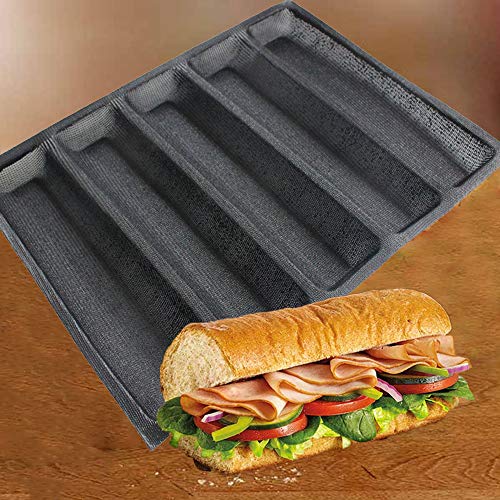
Best for Batch Baking FETESUR Silicone Perforated Baguette Pan with 5 | 9.4 | Check Price on Amazon |
Full Reviews
The Walooza 8x4 Loaf Pan is a carbon steel bread pan with a PFOA-free nonstick coating and an 8x4-inch inner cavity sized for 1-pound dough recipes.
Key Facts
- Size
- 8x4-inch inner cavity
- Outer Dimensions
- 9x5 inches
- Material
- Carbon steel
- Coating
- PFOA-free nonstick
Pros
- +Carbon steel construction for even baking
- +PFOA-free nonstick coating eases release and cleanup
- +8x4-inch cavity matches classic 1-pound loaf recipes
- +Two-pack option for baking multiple loaves
Cons
- −Hand-wash only to protect the nonstick coating
- −No stated weight or capacity beyond 1-pound dough
- −Outer dimensions of 9x5 inches may limit tighter ovens
Detailed Review
The 8x4-inch inner cavity is the detail that matters most here, sized to hold 1 pound of dough so banana bread and pound cake recipes do not overflow. The carbon steel body is built to spread heat evenly for a golden crust, and the pan is rated to resist warping at 450°F.
The PFOA-free nonstick coating lets baked goods slide out without greasing, but handwashing is the stated care method to keep that coating intact. I see this working best for everyday loaf bakers who want a dedicated pan for standard 1-pound recipes rather than oversized artisan batards.
Worth knowing before you buy, the outer 9x5-inch footprint is larger than the cavity and may crowd a compact oven. For my money, this suits a household baking banana bread, meatloaf, or freezer meal prep in standard loaf portions.
A carbon steel Pullman loaf pan with a lid, holding 1 lb of dough and rated to 450°F.
Key Facts
- Capacity
- 1 lb dough
- Material
- Carbon steel with silicone nonstick coating
- Rating
- Up to 450°F
- Care
- Dishwasher-safe, dry corners in oven
Pros
- +Lid enables both square Pullman loaves and open-top bread
- +Carbon steel construction with silicone nonstick coating
- +1 lb dough capacity fits standard loaf recipes
- +Dishwasher-safe for easier cleanup after baking
Cons
- −Requires hand-drying corners in the oven after washing
- −Batter baking needs parchment to prevent sticking
- −No stated induction or stovetop compatibility
Detailed Review
The KITESSENSU Pullman Loaf Pan is built around a 1 lb dough capacity and a carbon steel body with a silicone nonstick coating. The lid is the defining feature, letting you bake a square Pullman loaf with the cover on or an open-top sandwich bread with it off. I see this working best for someone who bakes a standard weekly loaf and wants both shapes from one pan.
The bottom vent is a detail worth noting, since it is designed to let heat circulate under the dough for a more even bake. Interior dimensions of 7.5 x 4 x 4.4 inches keep the footprint modest on a counter, and the pan is rated to 450°F. Worth knowing before you buy, the listing notes that batter-style recipes need a piece of parchment, and after dishwasher washing the corners should be dried in the oven so retained water does not sit in the seams.
I rate this a reasonable pick for home bakers who want a dedicated Pullman pan without moving up to a larger two-pound mold. Follow the manufacturer's instructions for temperature and care.
Vinino silicone loaf pans in a 2-pack, each measuring 9.5 x 5 inches, with a nonstick surface for easy release.
Key Facts
- Size
- 9.5 x 5 in
- Material
- Food-grade silicone
- Care
- Dishwasher-safe
- Included
- 2 loaf pans
Pros
- +Two pans per pack for baking multiple loaves at once
- +Nonstick silicone surface releases loaves cleanly
- +Dishwasher-safe cleanup after baking sessions
- +Flexible silicone stores easily in crowded drawers
Cons
- −No stated oven-safe temperature limit in the listing
- −Flexible walls need a support pan when moving full batter
- −Cream Confetti color only, no neutral or dark options
Detailed Review
These Vinino loaf pans measure 9.5 x 5 inches, the classic loaf size for banana bread, pound cake, and meatloaf, and the pack includes two pans so I can bake a pair of loaves back to back. The food-grade silicone surface is the real draw here, since it releases baked goods without the stuck edges that come with ungreased metal tins.
The thickened silicone walls are meant to hold shape through repeated cycles, and the smooth surface rinses clean under warm soapy water or goes into the dishwasher. I see this working best for anyone who bakes weekly and wants to skip paper liners entirely.
Worth knowing before you buy, the listing does not state an oven-safe temperature limit, so I would follow the manufacturer's manual for your oven setting. The flexible walls also need a support pan when you move a full batter to the oven.
A 4-cavity silicone bread loaf pan for baking baguettes, hot dog buns, and sandwich rolls, rated for -40°F to 446°F.
Key Facts
- Size
- 13.39 x 9.45 x 0.38 in
- Material
- Food-grade silicone
- Temperature Range
- -40°F to 446°F
- Care
- Dishwasher-safe
Pros
- +Four cavities bake several loaves or rolls in one batch
- +Smooth silicone surface releases bread with minimal oil
- +Dishwasher-safe for quick cleanup after baking
- +Folds flat for compact storage in small kitchens
Cons
- −Must not contact open flames, limiting broiler or direct-heat use
- −Silicone lacks the browning and structure of metal loaf pans
- −Thin 0.38-inch walls may feel flimsy when filled with wet dough
Detailed Review
The atrccs silicone bread loaf pan is a four-cavity mold built for baguettes, hot dog buns, hoagie rolls, and sandwich bread, with a stated temperature range of -40°F to 446°F. That range covers standard oven baking and refrigerator chilling for dough, which suits anyone who proofs and bakes in the same pan. The smooth silicone surface releases bread with a light coat of oil, so I see this working best for bakers who want to skip baking paper and scraping.
Cleanup is straightforward since the pan is dishwasher-safe, and the soft material folds flat for storage in a drawer or cabinet. The main trade-off is browning, because silicone does not conduct heat like metal, so crusts may come out paler. Worth knowing before you buy, the listing warns against direct contact with open flames, so keep it away from broilers or direct heat.
I rate this a reasonable pick for beginner and experienced bakers making sandwich rolls or sourdough loaves in batches, provided you follow the manufacturer's instructions for oven use.
Three-piece silicone bun pan set with a 6-cavity hamburger mold, a 6-cavity hoagie roll mold, and a scraper, rated to 446°F.
Key Facts
- Size
- 13.6 x 9.25 x 1.5 in and 14.5 x 9.5 x 1.18 in
- Cavities
- 6 per pan
- Material
- Silicone
- Rating
- Oven safe to 446°F (230°C)
Pros
- +Perforated bottoms promote even baking and reduce soggy bases
- +Flexible silicone releases buns intact without greasing
- +Dishwasher-safe molds and scraper simplify cleanup
- +Rated to 446°F for standard oven baking
Cons
- −Large 14.5-inch pans may not fit compact ovens
- −Limited to black color with no other finish options
- −Cavity depth of 1.18 inches caps how tall rolls can rise
Detailed Review
The perforated bottoms on these TOPZEA molds are the detail that separates them from a plain silicone tray. Hot air circulates under the dough, which helps buns brown evenly and keeps the base from turning soggy. The set splits the job in two, with a 6-cavity hamburger mold sized for 3.9-inch rounds and a hoagie mold with 5.75 by 2.5-inch cavities for sandwich and hot dog rolls.
I see the flexible silicone build as the practical win for anyone who bakes buns regularly. You bend the mold and the bread releases intact, and both trays plus the included scraper are dishwasher safe. The stated 446°F limit covers standard oven baking, though I would still follow the manufacturer's instructions on placement and handling.
Worth knowing before you buy, the hoagie tray measures 14.5 by 9.5 inches, so check your oven's interior before committing. The 1.18-inch cavity depth also limits how tall your rolls can rise. For my money, this suits home bakers making burger and hot dog buns in batches.
Emile Henry Ceramic Bread Cloche
Emile Henry ceramic bread cloche sized for a 3-cup flour round loaf, with a bell-shaped lid that traps steam for a crisp crust.
Key Facts
- Size
- 13.2 x 11.2 x 7 in
- Capacity
- Round loaf from 3 cups flour
- Material
- Ceramic
- Rating
- -20°C to 270°C
Pros
- +Steam-trapping lid creates a steam-injected-oven effect
- +Proofing base eliminates transferring dough to another vessel
- +Dishwasher-safe ceramic simplifies post-bake cleanup
- +Recipe and instruction booklet included for first-time bakers
Cons
- −Bulky 13.2 by 11.2 inch footprint eats counter and cabinet space
- −Limited to a single round loaf made with 3 cups of flour
- −Heavy 6.5-pound ceramic body is awkward to lift hot
Detailed Review
The Emile Henry Bread Cloche is a ceramic base and bell-shaped lid sized for one round loaf made with 3 cups of flour. The lid traps steam from the baking bread to mimic a steam-injected oven, which is the mechanism behind a crunchy crust and light crumb. You can proof directly in the base, so dough never needs transferring to another vessel.
The ceramic is rated from -20°C to 270°C, so it moves from freezer to hot oven without a separate proofing basket. The main trade-off is size. At 13.2 by 11.2 inches and 6.5 pounds, it claims real counter and cabinet space, and it handles only one round loaf at a time.
I see this working best for a baker who makes one artisan-style round loaf at a time and wants the steam effect without improvising a Dutch oven setup. Follow the manufacturer's instructions for preheating and handling the hot ceramic.
FETESUR silicone and fiberglass perforated baking form measures 17.7 by 3.4 inches and shapes up to five loaves while letting steam escape.
Key Facts
- Size
- 17.7 x 3.4 in
- Material
- Food-grade silicone and fiberglass
- Capacity
- 5 loaves
- Color
- Black
Pros
- +Silicone and fiberglass construction resists sticking during baking
- +Perforated base lets steam escape for better crust texture
- +Five-loaf capacity suits batch baking for sandwiches
- +Flexible mold releases loaves without scraping
Cons
- −No stated oven-safe temperature limit in the listing
- −Hand-wash care not specified beyond non-stick surface
- −Single black color limits kitchen matching options
Detailed Review
The FETESUR silicone perforated baking form is built around a 17.7 by 3.4 inch footprint that fits five loaves at once, which is the detail that matters most for anyone baking sandwich or baguette bread in batches. The food-grade silicone and fiberglass construction gives the mold enough structure to hold shape while staying flexible enough to release loaves without scraping.
The perforations across the base are the second detail worth noting. They let steam escape during baking, which is the difference between a soft crust and one with more texture. I see this working best for home bakers who want consistent baguette shapes without a dedicated metal pan. The listing also states microwave and oven use, so the same mold can move from proofing to baking.
The main trade-off is that the listing gives no oven-safe temperature figure, so I would check the manufacturer's manual before using it at high heat. Worth knowing before you buy is the single black color, which limits matching a kitchen palette.
FAQs
What is the difference between a bread mold and a loaf pan?
A bread mold is the broader term, covering silicone trays, Pullman pans with lids, and ceramic cloches, while a loaf pan usually means a simple open metal pan. The shape and material decide the crust, so match the mold to the bread style you bake most. Check the manufacturer’s manual for the temperature range before first use.
Do you need a lid on a Pullman loaf pan?
The lid is optional and mainly changes the shape, giving you a flat-topped square loaf for even sandwich slices. Bake without it for a domed artisan-style top. If you bake with a wet batter rather than dough, line the pan with parchment first to keep release clean.
Is silicone or metal better for artisan bread?
Silicone releases bread easily and stores flat, but it does not conduct heat the way metal does, so crust browning is gentler. Metal pans and ceramic cloches push more heat into the loaf for a darker crust. For a crackly sourdough crust, a ceramic cloche traps steam the way a steam-injected oven would.
How do you keep bread from sticking to a mold?
A light coat of oil or a parchment liner handles most sticking, even on a nonstick surface. Silicone molds usually need only a thin film, while metal pans benefit from greasing the corners where batter pools. Follow the pan’s own care instructions, since handwashing often protects a coating longer than a dishwasher cycle.
Final Thoughts
What matters most is matching the mold to the bread you actually bake, not collecting every shape on the shelf. A standard loaf pan covers daily sandwich bread and quick breads, while a cloche or lidded pan earns its place only if you chase a specific crust or crumb.
For most kitchens, the Walooza 8×4 Loaf Pan – Carbon Steel Bread Baking is the best overall choice. Its carbon steel build spreads heat for an even bake, and the eight-by-four cavity matches a classic one-pound recipe so batter does not overflow. If budget is the priority, the KITESSENSU Pullman Loaf Pan with Lid is the best value pick, with a lidded design that lets you choose a square sandwich loaf or an open-top bake from the same pan.
Choose the right mold and the guesswork about loaf size and crust disappears, leaving you with a pan that simply fits the bread you make.


