
8 Best Grain Mills for Homebrewing and All Grain (2026)
Updated for November 2026, this guide to 8 best grain mills for homebrewing compares Victoria, Ferroday, TFCFL and more on roller gap control, hopper size, and drill-drive support. Each mill is scored on the listing details that decide whether a crush drains cleanly or turns into a stuck sparge.

Half flour and half whole kernels is the crush that derails a brew day. It usually traces back to a mill that will not hold a gap setting, and it shows up hours later as a stuck sparge or a fermenter full of starch that never converted. There are plenty of forum workarounds for the problem, but the real fix is a mill with rollers you can actually adjust and a hopper that empties into the bucket instead of onto the floor.
I built this roundup from the listings rather than from a brew session. That means roller material and knurl pattern, the stated gap range, hopper capacity, whether a drill can turn the drive shaft, and how the base sits over a bucket. Those four or five details tell you more about how a mill behaves on brew day than any brand name does. Each pick carries a BHK Score drawn from those listing facts plus the rating data shown on the page.
My overall pick for best grain mills for homebrewing is the FERRODAY Malted Grain Mill for Grain Malt Barley. Its two rollers open from 0.025 to 0.1 inch, so you can set a crush that cracks the kernel while leaving the husk mostly intact, and the wooden base is cut to sit steady over a standard fermenting bucket. My top picks are just below.
Our Top Picks
| Product | BHK Score | ||
|---|---|---|---|

|
Best Overall FERRODAY Malted Grain Mill with 7.7LB Hopper | 9.9 | Check Price on Amazon |

|
Best for Large Batches TFCFL Electric Grain Mill with 11LB Stainless | 9.9 | Check Price on Amazon |

|
Best for Small-Batch Brewing Garwei 2 Roller Malt Mill with Stainless Steel | 9.8 | Check Price on Amazon |

|
Brewland Grain Mill Pro with 15LB Hopper | 9.8 | Check Price on Amazon |

|
Best for Manual Grain Milling Victoria Manual Cast Iron Grain Mill with | 9.6 | Check Price on Amazon |
|
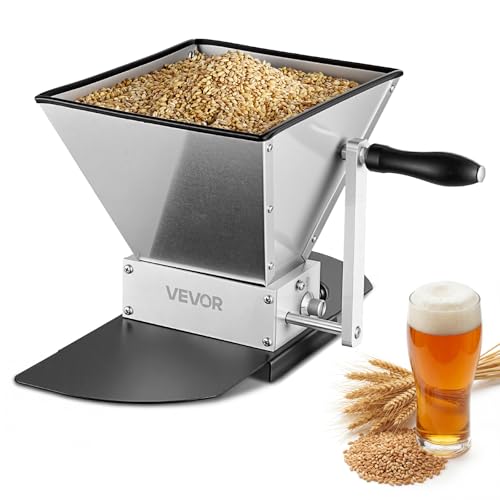
Best for Home Brewing VEVOR Manual Grain Mill with 1.06 Gallon Aluminum | 9.6 | Check Price on Amazon |
|
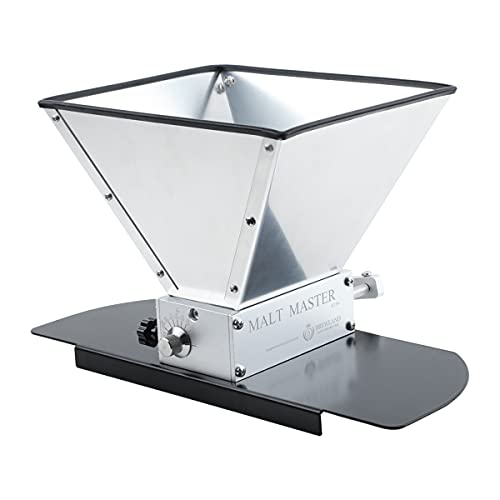
Best for Homebrew Grain Milling Brewland Grain Mill with 7.7LB Capacity Hopper | 9.5 | Check Price on Amazon |

|
Best for Manual Grinding Lehman's Manual Power Grain Mill with 6 Cup Hopper | 9.4 | Check Price on Amazon |
Full Reviews
FERRODAY malted grain mill features 5-inch stainless steel rollers and a large 7.7 lb hopper for brewing grain malt barley.
Key Facts
- Capacity
- 7.7 lb hopper
- Material
- Food-safe stainless steel rollers and screws
- Size
- 10.43 x 11.8 x 10.43 inches
Pros
- +Food-safe stainless steel rollers and screws
- +Thicker hopper accommodates up to 7.7 pounds of grains
- +Adjustable roller clearance for desired grain crush fineness
- +Optional drill attachment mode increases throughput to 7 pounds per minute
Cons
- −Not suitable for corns, soybeans, flakes, or flour
- −Relatively bulky footprint at 10.43 by 11.8 inches
- −Requires manual cleaning; no dishwasher-safe parts stated
Detailed Review
The FERRODAY malted grain mill includes a large 7.7-pound hopper that makes it practical for brewing sizable batches without frequent refills. It uses 5-inch stainless steel rollers with 12 TPI knurling that efficiently crush malted barley while leaving hulls intact, which benefits the sparging process. The roller gap is adjustable from 0.025 to 0.1 inches, allowing control over grain fineness.
I see this mill working best for homebrewers who want to process large volumes with precision. The option to attach a 3/8 inch low speed drill helps reduce manual effort and boosts throughput to about 7 pounds per minute. Worth knowing before you buy, its footprint is somewhat sizable at over 10 inches square, so it requires countertop space.
The wooden base is designed to fit securely on a 5-gallon fermenting bucket, which is a thoughtful detail for setup stability. I rate this a reasonable pick for brewers focused on malted barley who need a durable adjustable mill but can accommodate its size and manual cleaning requirements.
Electric grain mill with 60W motor and 4.23QT stainless steel hopper for high-capacity grinding at 44 lbs/h.
Key Facts
- Capacity
- 4.23 QT Hopper
- Power
- 60W Motor
- Material
- Stainless Steel Rollers and Body, Aluminum Alloy Hopper
- Size
- 19.3 x 6 x 11.2 inches
Pros
- +Adjustable rollers for customized grinding consistency
- +Pure copper motor reduces noise during operation
- +Large hopper capacity supports batch processing
Cons
- −Relatively heavy at nearly 20 pounds limits portability
- −No dishwasher-safe parts require manual cleaning
- −Limited color option available only in silver
Detailed Review
This grain mill features stainless steel rollers and body combined with an aluminum alloy hopper, which should offer good resistance to corrosion and wear in home use. Its 60W motor runs at 75 RPM, supporting a grinding rate of up to 44 lbs per hour, making it suitable for larger batch grain processing such as home brewing or cereal crushing. The hopper's capacity of 4.23 quarts allows for continuous grinding without frequent refills.
I'd consider this mill reasonable for home users who need more volume but have space for its 19.3 by 6 by 11.2 inch footprint. Worth knowing before purchasing is its weight of nearly 20 pounds, which could make moving it inconvenient. The design includes adjustable rollers for controlling grind coarseness, a feature that supports tailored results. However, cleaning requires hand-washing since no dishwasher-safe parts are noted.
This model suits users who prioritize capacity and corrosion resistance over portability or color variety. The quieter motor design may also appeal to those sensitive to noise during grain processing.
Garwei 2 Roller Malt Mill features 304 stainless steel rollers and an oak hopper for precise malt crushing.
Key Facts
- Material
- Oak wood and 7071 aluminum alloy
- Rollers
- 304 stainless steel twin rollers
- Dimensions
- 3.54 x 3.54 x 11.81 inches
- Included
- Hardware and hand crank
Pros
- +Adjustable roller gap for customizable grain crush size
- +Includes hardware and tools for quick setup
- +Combination of oak and aluminum offers industrial durability
Cons
- −Manual operation may be slower for large batch processing
- −Limited to malt and barley crushing only
- −Vertical height may challenge storage in low cabinets
Detailed Review
This malt mill combines precision 304 stainless steel rollers with a solid oak wood hopper designed specifically for small-batch homebrewing. Its vertical design minimizes countertop footprint, making it easier to fit in kitchens with limited space. The side knobs allow fine adjustment of the roller gap to keep grain husks largely intact, which supports efficient lautering.
The mill operates manually via a durable hand crank or can connect to a standard household electric drill at low speed, offering versatile operation modes for different user preferences. I see this working best for brewers focused on quality control in smaller batches rather than high-volume milling.
Worth knowing before you buy is the focus on malt and barley only, so it is not suitable for other grains or seeds. Also, the vertical height of nearly 12 inches may affect storage options in some kitchens. Overall, I rate this a reasonable pick for dedicated homebrewers with limited counter space.
Brewland Grain Mill Pro is a steel mill with a 15LB hopper and adjustable rollers for precise malt crushing.
Key Facts
- Capacity
- 15LB Hopper
- Material
- Steel Base with Stainless Steel Rollers
- Size
- 16.3 x 11.2 x 8 Inches
- Weight
- 13 Pounds
Pros
- +Precise roller gap adjustment for controlled grain crushing
- +Large hopper reduces frequent refills in batch brewing
- +Durable steel base fits common brewing buckets
- +Dual manual and powered grinding options for flexibility
Cons
- −Limited to malted grains, cannot mill coffee or corn
- −No powder milling capability restricts finer grind use
- −Relatively heavy 13-pound weight affects portability
Detailed Review
The Brewland Grain Mill Pro stands out with its 15LB hopper capacity which is ideal for handling larger homebrew batches efficiently. Its adjustable roller gap from 0.025 to 0.1 inch allows precise control over malt crushing, helping to release sugars without breaking husks. This is important for maintaining the flavor profile in brewing.
The mill offers two grinding modes including a manual crank and an option to attach a low speed electric drill, providing flexibility depending on the user's preference or workload. I see this working best for brewers who want a stable setup as the solid steel base fits standard buckets securely.
Worth knowing before you buy, the mill is limited to malted grains only and cannot handle coffee beans, corn, or pulverize into powder. For my money, it suits homebrewers focused on malted barley who appreciate precise roller settings and batch capacity.
Manual grain mill made of cast iron with adjustable coarseness and a high hopper capacity of 2400g.
Key Facts
- Capacity
- 2400g Hopper
- Material
- Cast Iron with Double Tin Plating
- Size
- 18.1 x 0 x 13.7 inches
- Weight
- 4.36 pounds
Pros
- +Durable cast iron body with erosion-resistant grinding discs
- +High hopper holds substantial grain amounts for extended milling
- +Non-slip rubber protector prevents surface damage and slipping
Cons
- −Manual operation requires physical effort, limiting large volume use
- −Cannot grind grains to superfine powder, limiting flour quality
- −Clamp size restricts mounting to specific table thickness range
Detailed Review
The Victoria Manual Cast Iron Grain Mill features a heavy-duty cast iron construction with double tin plating and erosion-resistant discs, which promises durability during grinding. Its high hopper with 2400g capacity supports processing larger quantities of grain in one session, which is practical for small batch home milling. The mill clamps onto tables between 1/2 and 2 inches thick and includes a non-slip rubber protector to secure the unit while in use.
I see this mill working best for users who prefer traditional manual grinding and want control over the grain's coarseness using the adjustable screw. Worth knowing before buying is that it cannot produce superfine flour textures, limiting its use for recipes requiring finely ground whole wheat. The manual crank with a wooden handle adds comfort but also means it requires physical effort, which might not suit high-volume milling.
For my money, this mill suits home cooks seeking a sturdy, cast iron grinder for moderate quantities and versatile grain types without electric operation.
Manual grain mill with 1.06-gallon aluminum hopper and adjustable stainless steel rollers for home brewing malt grinding.
Key Facts
- Capacity
- 1.06 Gallon Hopper
- Material
- Aluminum Hopper, Stainless Steel Rollers
- Dimensions
- 16.1 x 12.6 x 9.6 inches
- Weight
- 8.16 pounds
Pros
- +Large hopper capacity minimizes interruptions during milling
- +Adjustable roller gap for tailored grind size
- +Metal base plate enhances stability on buckets
- +Stainless steel rollers ensure consistent crushing
Cons
- −Not suitable for grinding corn
- −Relatively large footprint may limit small countertop space
- −Requires manual effort without electric assistance
Detailed Review
This VEVOR manual grain mill features a 1.06 gallon aluminum hopper that holds a substantial amount of grain to reduce the need for constant refills. It uses two stainless steel rollers with an 8-level adjustable gap allowing precise control over grind size, which is important for different brewing needs. It is specifically engineered for malt, barley, and wheat but is not recommended for corn. The detachable metal base plate secures the mill to buckets, providing stability and directing crushed grain cleanly into the container.
Worth knowing before you buy is the relatively large physical footprint, which may pose challenges for small kitchen counters. I see this mill working best for home brewers who have space and want control over grain crushing without electric power. Its manual operation requires physical effort but offers customization that suits varied brewing processes.
Brewland Grain Mill crushes malt and barley with stainless steel rollers and a 7.7LB hopper for controlled grain crushing.
Key Facts
- Capacity
- 7.7 Pounds
- Material
- Stainless Steel Rollers and Metal Base
- Dimensions
- 16.5 x 9.6 x 4.5 inches
- Weight
- 7.7 Pounds
Pros
- +Adjustable roller gap for preserving husks and malt sugars
- +Large hopper holds enough grain for typical homebrew batches
- +Compatible with low-speed electric drills for easier grinding
- +Sturdy metal base fits standard brewing buckets securely
Cons
- −Not suitable for crushing corn, coffee beans, soybeans, or sugarcanes
- −Cannot mill grains into powder, limiting fineness of crush
- −Relatively large footprint may challenge small countertop spaces
Detailed Review
This Brewland Grain Mill features two stainless steel rollers with adjustable spacing from 0.025 to 0.1 inch allowing precise control over the grain crush. Its 7.7LB hopper capacity supports moderate homebrew batches without frequent refilling. The mill offers two grinding modes: manual via a long crank handle or by attaching a low-speed electric drill thanks to an 8mm hex socket drive shaft with bearing rollers.
The solid steel base is designed to fit standard 5 or 6.5 gallon buckets, securing the mill during use. I see this working best if you want control over malt crushing but can accommodate its size on the countertop. Worth knowing before buying is that this mill cannot process corn, coffee beans, or soybeans and does not mill grains into powder, limiting its versatility.
For my money, this suits brewers needing customizable crushing with a robust metal build and decent hopper size for home batches.
Manual grain mill with stainless steel burrs and 6 cup hopper grinds dry grains to pastry flour.
Key Facts
- Capacity
- 6 Cups
- Dimensions
- 12 x 12 x 14 inches
- Weight
- 26 Pounds
Pros
- +Stainless steel burrs resist buildup and ease cleaning
- +Extra large hopper reduces frequent refilling during use
- +Flywheel design lowers hand effort required for grinding
Cons
- −Heavy 26 pound weight limits easy portability
- −Manual grinding requires physical effort and time
- −Limited color choice with only green finish available
Detailed Review
This grain mill features electrolytic polished stainless steel burrs that provide a smooth and clean grinding surface for various dry grains. Its 6 cup hopper capacity is large enough for small batches, making it practical for homemade bread and baking. The inclusion of a 12 inch iron flywheel pulley helps maintain momentum during hand grinding and can also be motorized for less manual effort. I see this mill working best for cooks who want control over freshly ground flour without electric dependency. Worth knowing before you buy, it weighs 26 pounds and requires physical effort for grinding which may not suit everyone. The green color and fixed size limit customization and portability options.
FAQs
Do you need a grain mill if you already buy crushed malt?
Buying pre-crushed malt leaves the gap decision to the shop, and you cannot correct a crush that arrives too fine for your system. Owning a mill puts that adjustment in your hands, which matters most when you buy grain in bulk or brew the same recipe often.
What roller gap should you set for malted barley?
Most mills here adjust between 0.025 and 0.1 inch, and a sensible starting point is a gap wide enough to crack the kernel while leaving husks largely whole. Tighten slowly from there and inspect the crush by hand. Your manifold design and your own batch results settle the final setting.
Can you run a malt mill with a standard electric drill?
Several mills in this group accept a low-speed drill on the drive shaft, typically a 3/8 or 1/2 inch chuck, which removes the crank work from a large batch. Match the drill speed to what the listing specifies, check that the shaft turns freely before filling the hopper, and follow the manufacturer’s instructions for attaching the drill.
Is a burr mill or a roller mill better for homebrewing?
A roller mill suits brewing because it cracks kernels and leaves husks largely intact for the filter bed. Burr mills such as the Victoria and Lehman’s models grind toward flour, which fits bread and corn better than a mash that needs to drain freely.
Final Thoughts
What separates these mills is not the badge on the hopper but three things: whether the gap holds where you set it, whether the hopper swallows a full grain bill without a refill, and whether the base sits on your bucket instead of wobbling above it. Brew large batches and roller size and drive mode start to matter. Brew small ones and a compact mill that stores on a shelf earns its space.
For most homebrewers, the FERRODAY Malted Grain Mill for Grain Malt Barley is the safest place to start. The 7.7 lb hopper covers a full grain bill in one fill, the knurled rollers pull grain at a steady rate, and the wooden base is shaped to rest over a standard fermenting bucket. Add a low-speed drill and a long brew day stops being an arm workout. It is built for malt and barley, so keep corn and soybeans for a different tool.
The Victoria Manual Cast Iron Grain Mill 2400g is the budget pick, and it earns that spot by doing more than malt. Cast iron construction, a high hopper, and a table clamp let you crack barley for a small batch and then move on to corn, coffee, or spices without buying a second tool. It is a hand crank with no drill option, and the listing is clear that it will not produce a superfine flour, so treat it as a versatile cracker rather than a flour mill. Pick the mill that matches your batch size and your bucket, and the crush stops being the variable you worry about on brew day.